Rare 13 Star Flag Annin & Company N. Y.
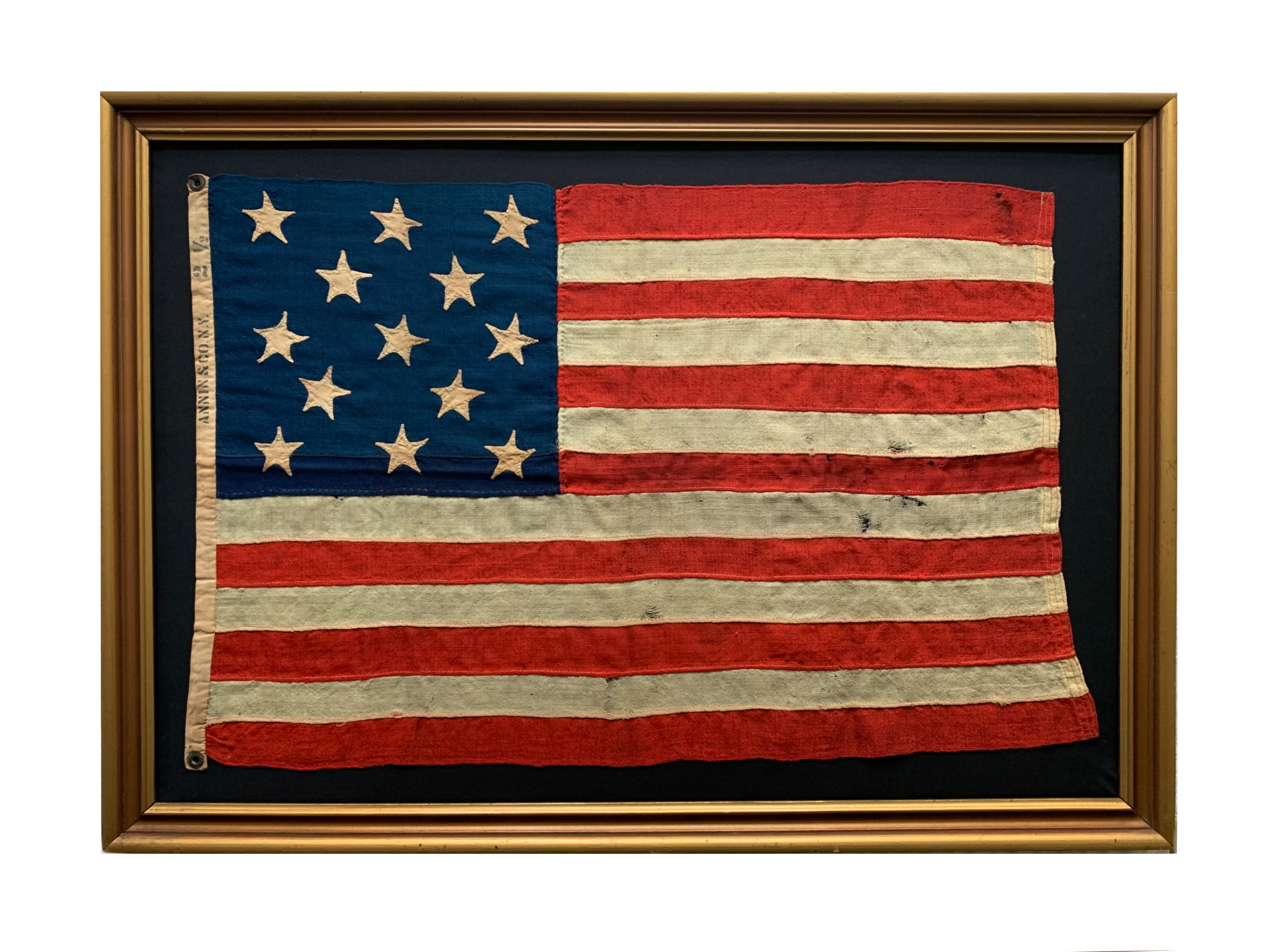
13 STAR AMERICAN FLAG, 1861-1876 ca.
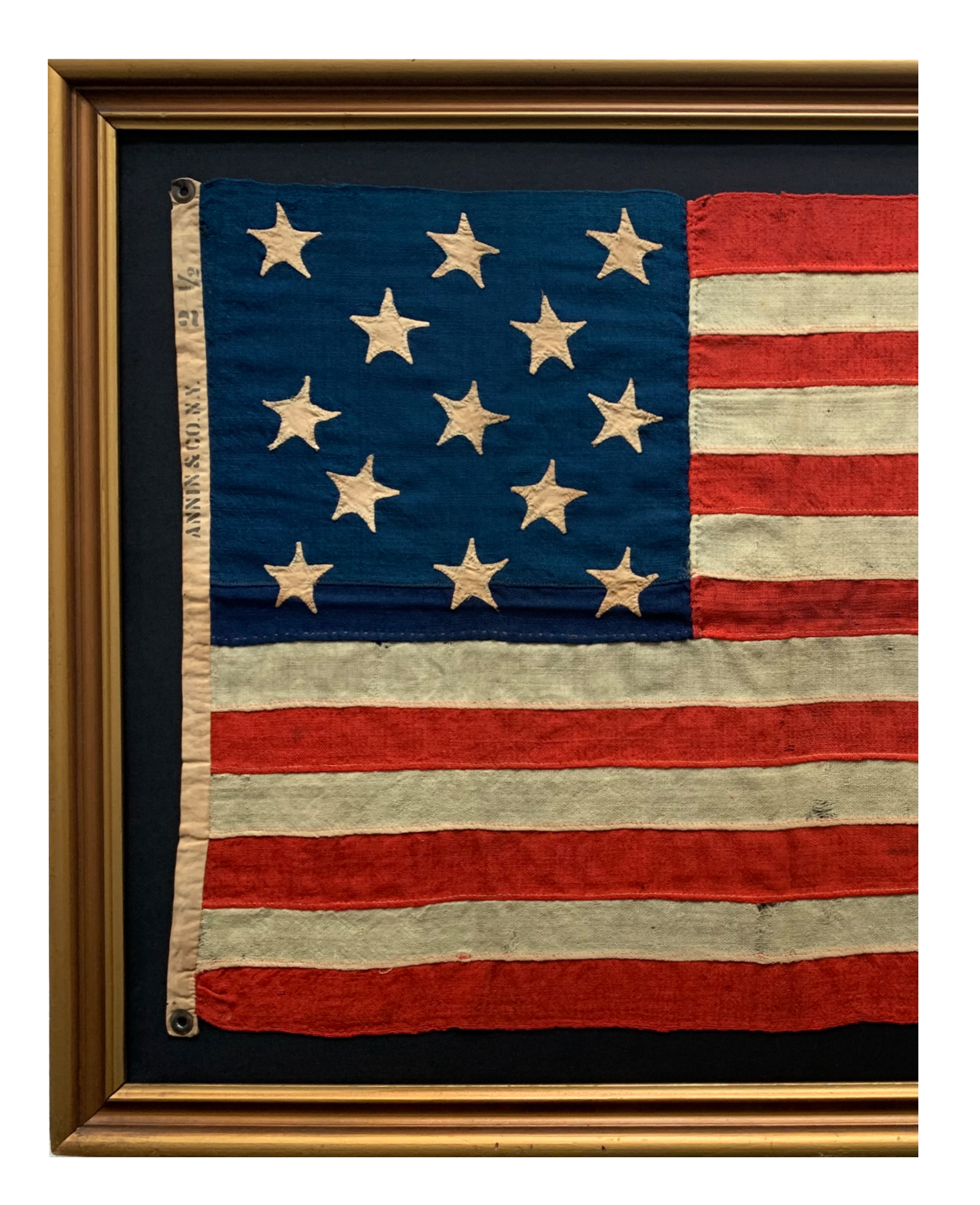
Hand-sewn stars in a 3-2-3-2-3 pattern
Annin and Co. NY
Flag size: (HxL) 19”x 28 1/4”
Frame: (HxL) 25”x 35”
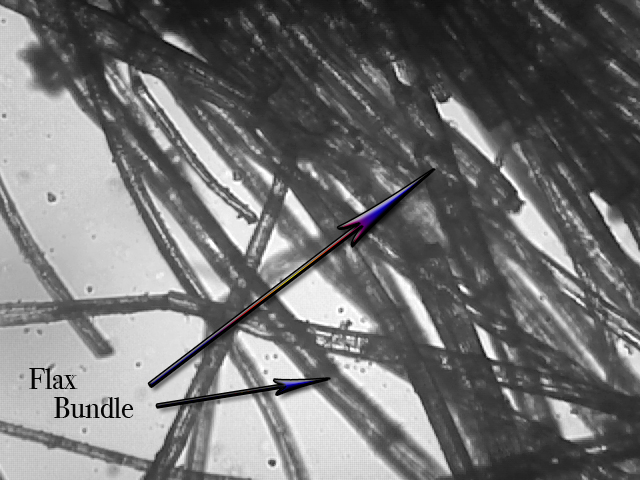
This extraordinary 13-star American flag conservatively dates to circa 1861–1876. It is of particular significance, to recognize that the flag contains several repairs made with flax thread, typical of thread and yarn pre-dating the Civil War, and detailed as such in the microscopy analysis.
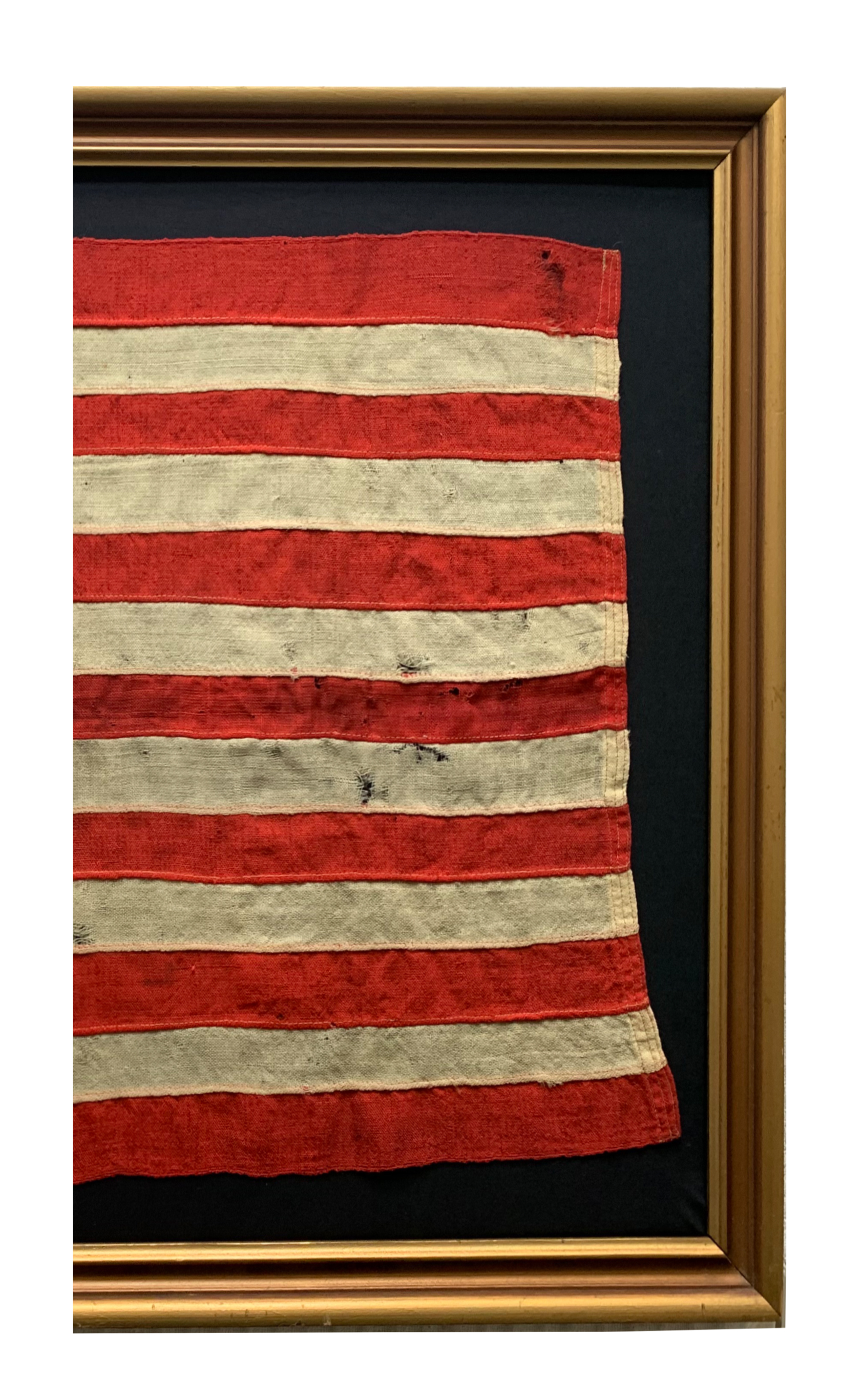
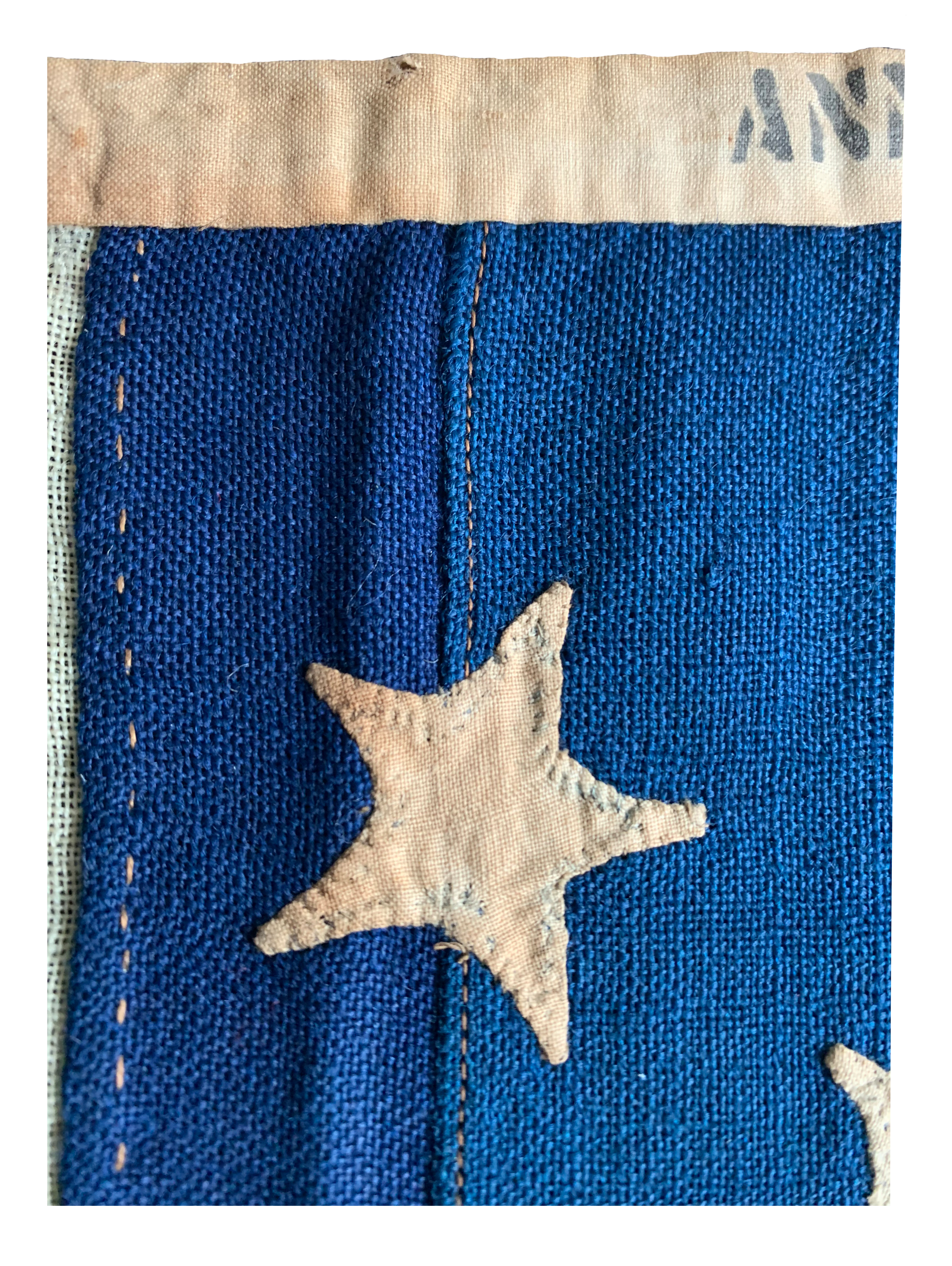
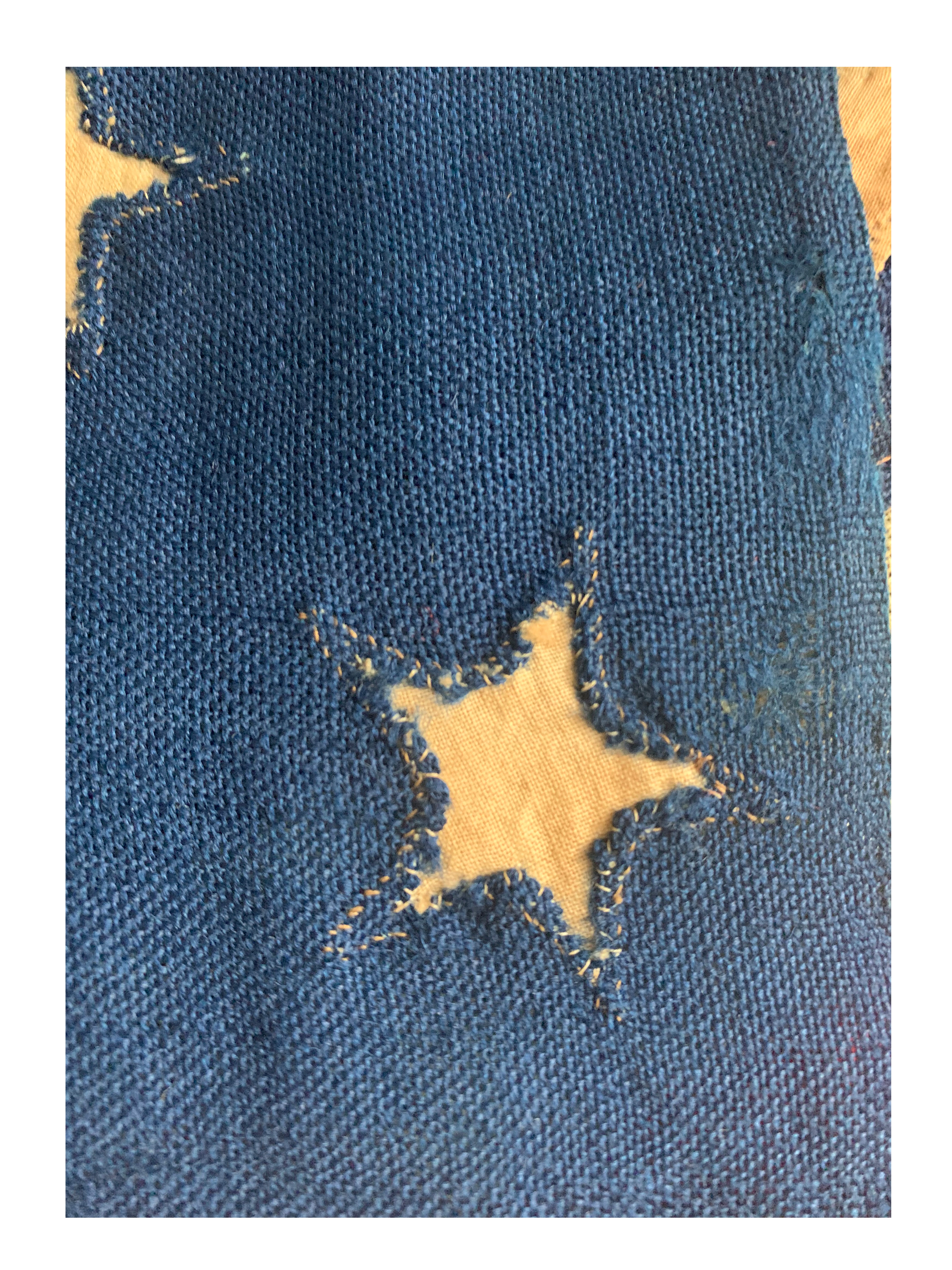
The flag is made of wool bunting with alternating red and white stripes pieced together by lock stitching. The blue canton is hand-sewn to the stripes and hoist by use of flax thread. The field displays 13 cotton stars, hand-sewn in a peek-a-boo manner, created by cutting away portions of the blue fabric to reveal the underlying white layer. On the reverse, the stars were constructed using overcast stitching, a hand-sewn edge-binding technique employed to stabilize the raw, cut edges.
The 3-2-3-2-3-star arrangement is often associated with the design attributed to Francis Hopkinson, a New Jersey statesman, signer of the Declaration of Independence, and contributor to the development of the original American national flag.
The hoist is a cotton/ flax blend, entirely hand-sewn to the canton and stripes, and bears the “Annin & Co. stamp, in black ink. Two metal grommets set into the canvas header aligns with standard marine flag construction from the 1860’s- 1870’s to allow for halyard attachment on boats.
Annin & Company is said to be the oldest and largest flag manufacturer in the United States. The company traces its origins to 1820, when Alexander Annin established a ship chandlery business in New York City, supplying nautical goods and producing flags and pennants for ships. In 1847, his sons, Edward and Benjamin Annin, assumed control of the business and focused its operations exclusively on flag manufacturing. Today, Annin & Company remains a six-generation, family-owned American company with a long history of producing flags associated with significant moments in U.S. history.
Microscopic fiber analysis reveals two distinct markers. The repair thread is hand‑spun flax identifiable by bundles with ultimates. Slight salt‑air micro‑pitting on the flax fibers suggests maritime exposure.
Condition
The flag is in good condition for its period and use; colors remain vibrant, slight mothing throughout, upper left canton has fabric loss, lower left red stripe fabric separation. A distinct hand‑sewn repair is present along the lower inch of the canton. This repair is hand stitched, confirming it was performed manually rather than at the factory. The location of the repair corresponds to one of several common stress points on naval small‑boat ensigns, typically due to wind shear and constant motion.
Mounting: The flag is pressure mounted on a mat board covered with a pre-washed cotton fabric over acid-free cotton batting. It is surrounded by a beautiful vintage wood frame, protected with UV quality glass.
Summary
This flag embodies a layered textile history, combining early industrial manufacture, hand craftsmanship, and evidence of naval use and maintenance. It stands as a genuine working artifact rather than a reproduction or ceremonial piece.
The “Annin & Company” stamp connects this flag to a manufacturer with early American flag-making history and notable association with some of the nation’s most significant historical events.
Multiple independent features affirm naval use: the flag is made of wool, 13‑star 3‑2‑3‑2‑3 pattern, 2½‑foot hoist, salt‑air micro‑pitting on the flax fibers, wear patterns consistent with salt‑air and wind exposure and the use of cotton/flax threads used for repairs typical of early shipboard maintenance technique.
Email: jtfrancis1775@gmail.com
Item: 13-719-188