36-Star American National Garrison Flag, Captain George H. Dean Provenance, Nevada & Nebraska, 1865–1867
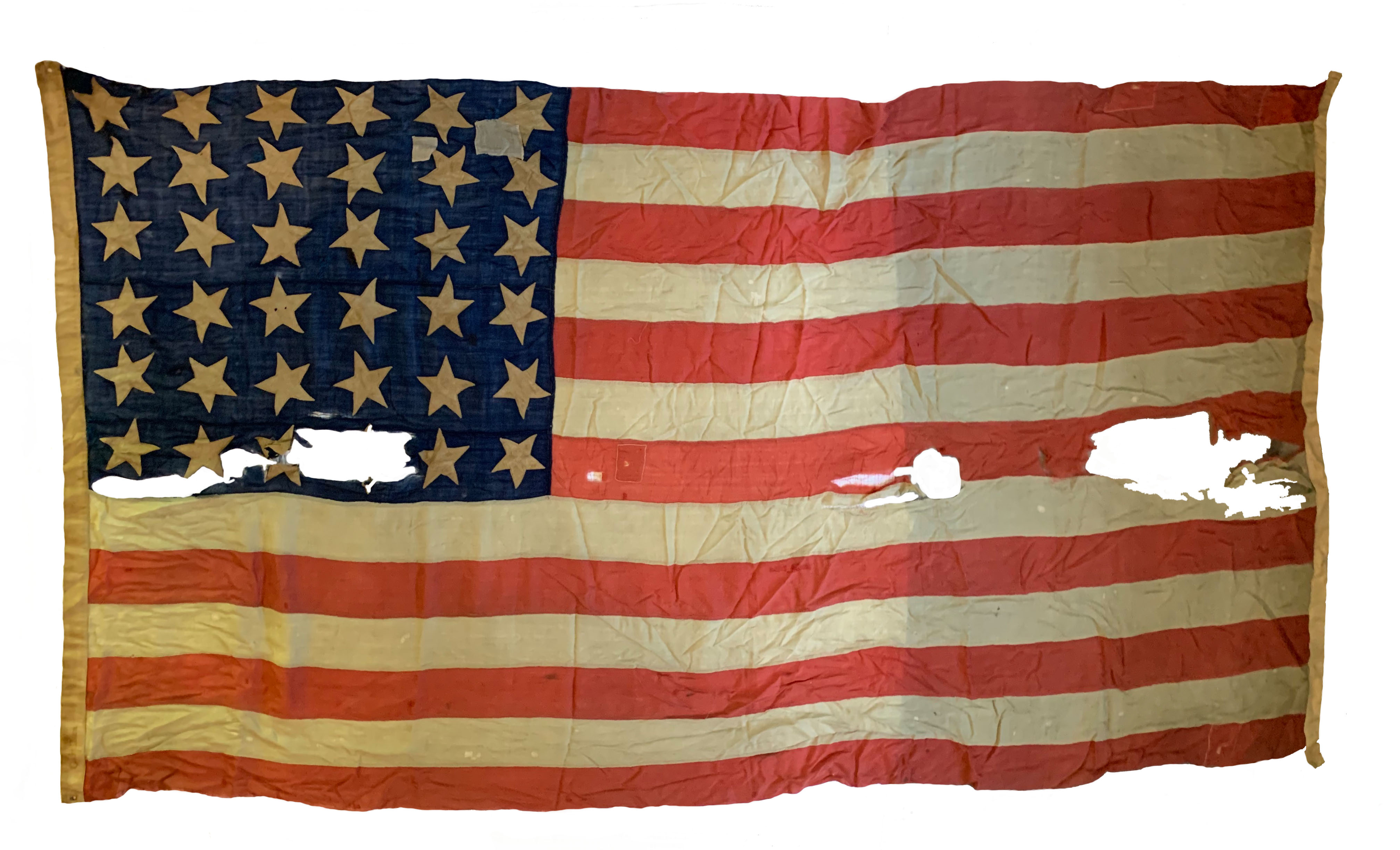
36-Star American National Garrison Flag, Captain George H. Dean Provenance, Nevada & Nebraska Statehood, 1865–1867
This extraordinary 36-star American National flag dates precisely to the immediate post-Civil War Reconstruction era, circa 1865–1867. The artifact is of immense historical and physical significance, boasting unique transitional manufacturing techniques and exceptional provenance tracking its active military service and subsequent veteran hall veneration.
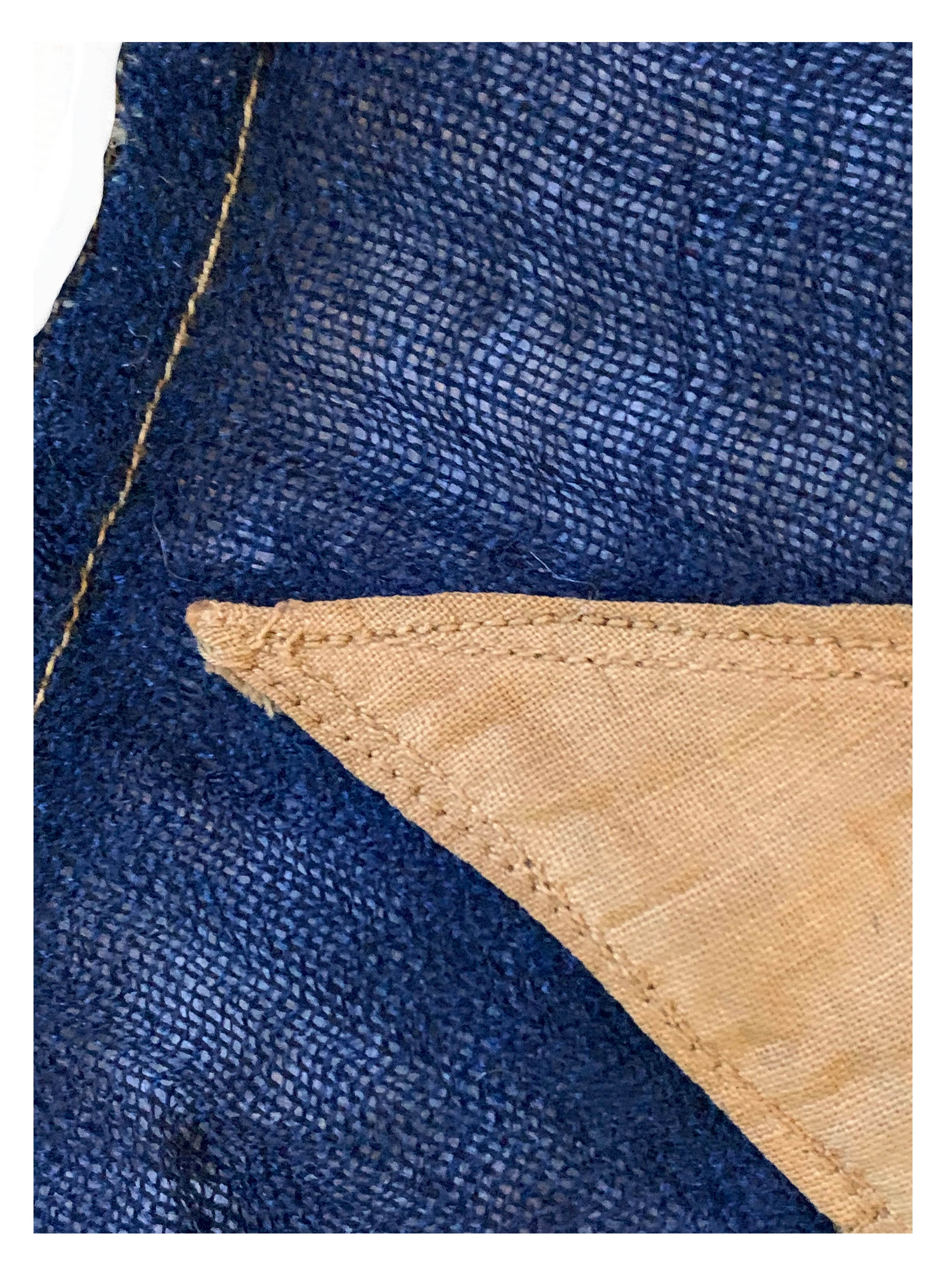
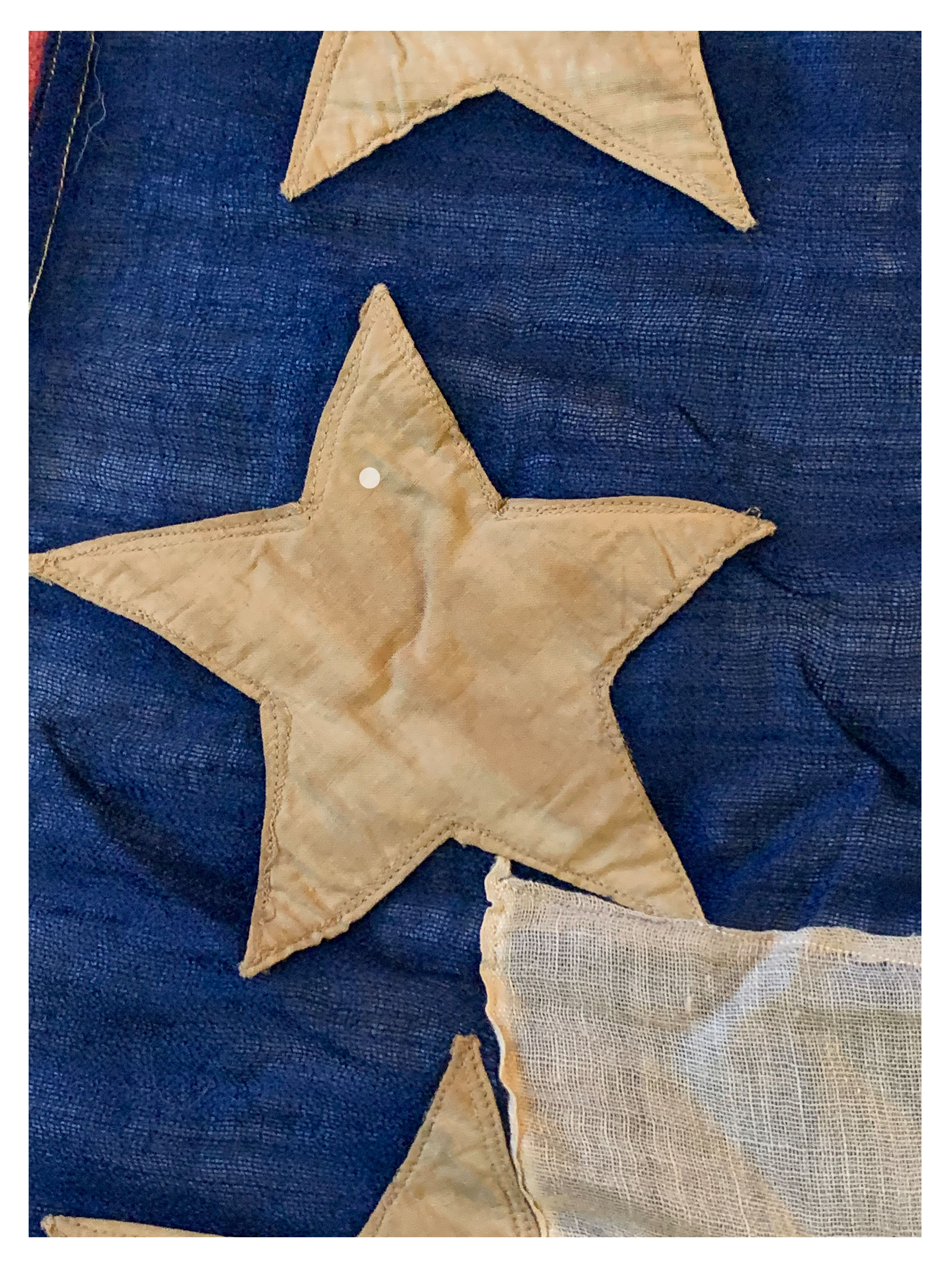
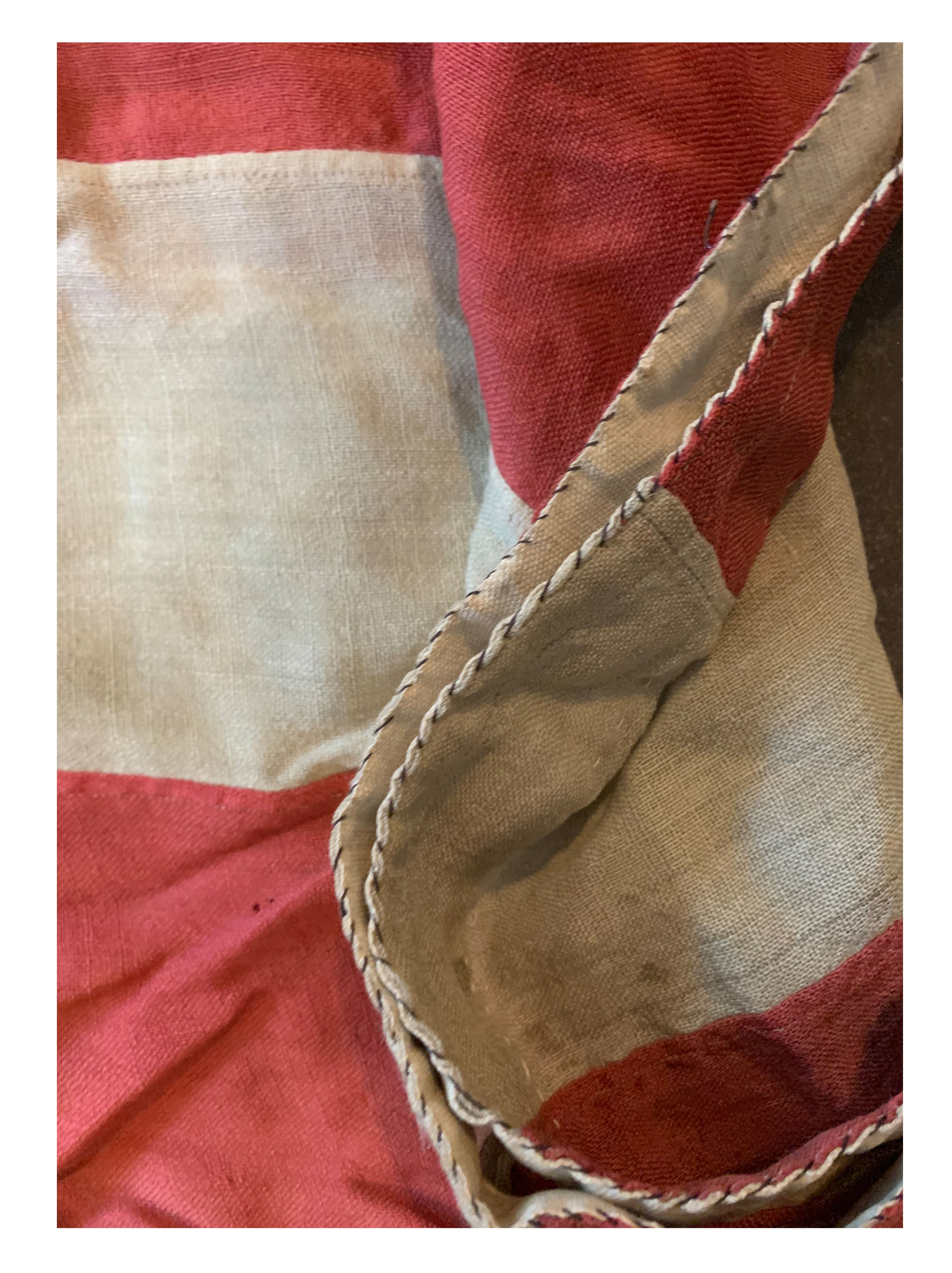
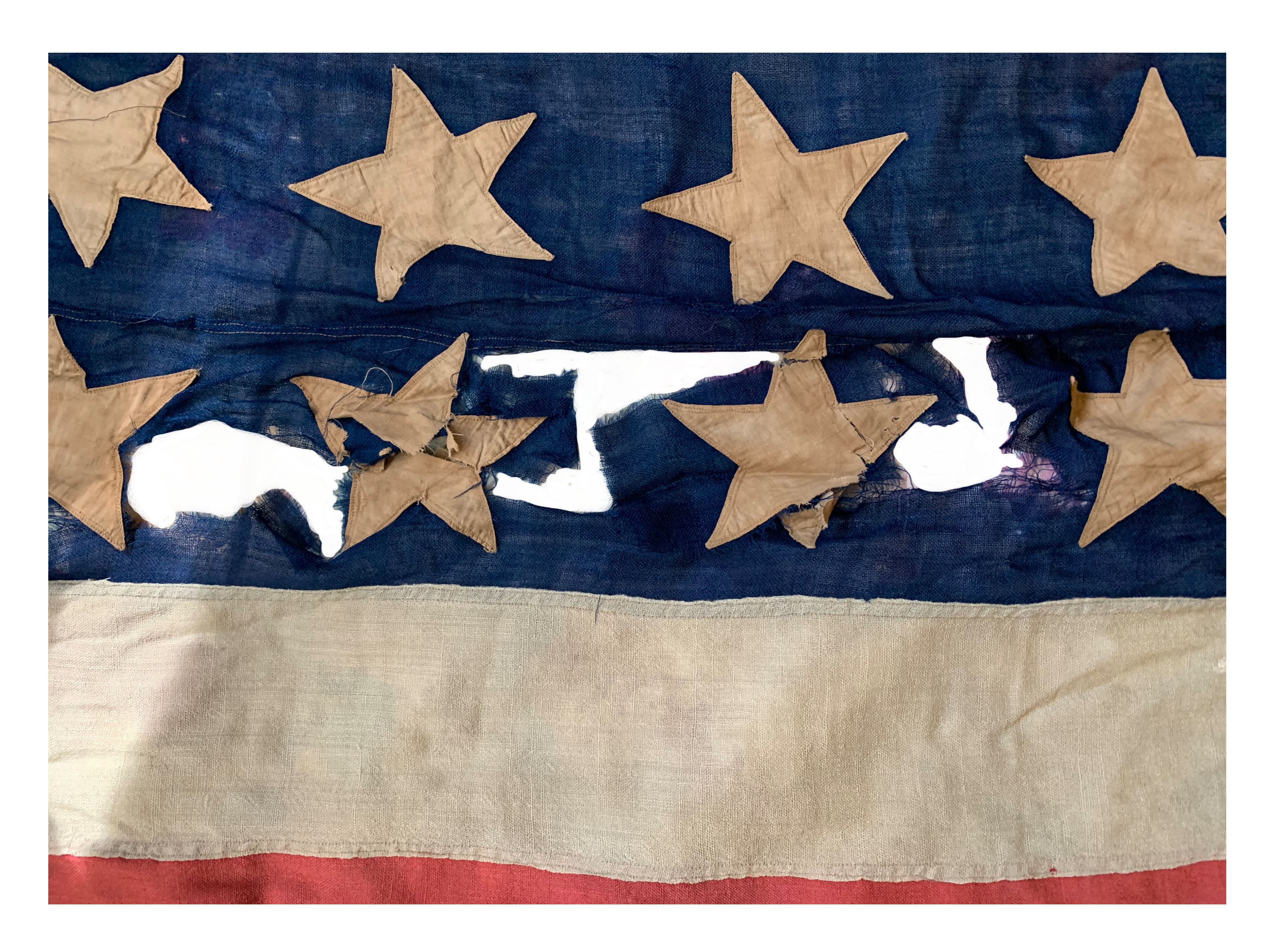
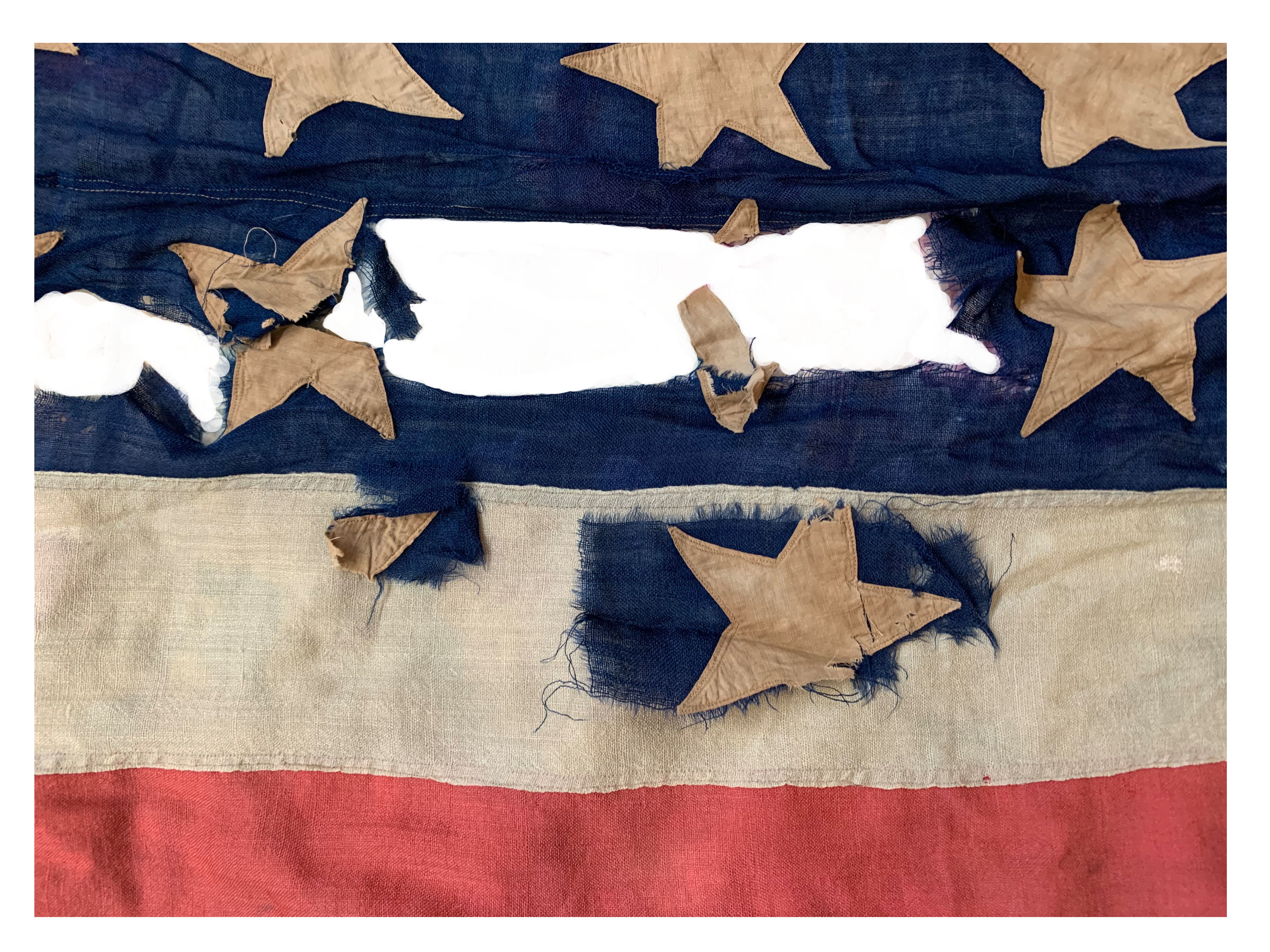
The body of the flag is made of loomed wool bunting with horizontal stripes pieced together by industrial machine lock stitching, a hybrid method adopted by wartime contractors to meet federal demands. The blue canton displays 36 stars secured with clean lock stitching, though physical wear has left one star completely missing and a second star highly fragmented.
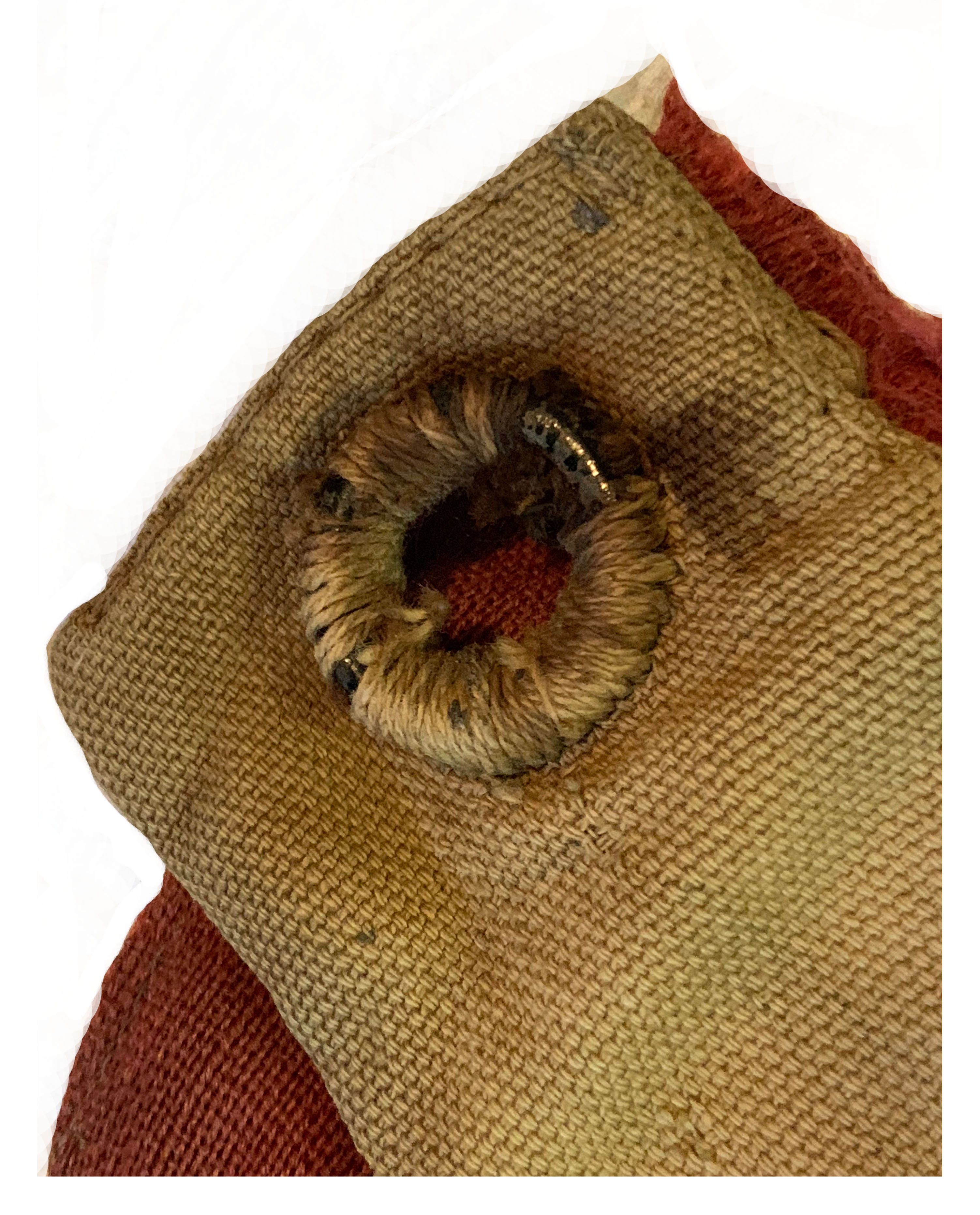
The heavy cotton canvas hoist is entirely hand-sewn to the canton and stripes and displays an early, highly uncommon maritime-style thimble grommet construction method. Rather than standard machine-stamped brass grommets, these heavy metal rings are firmly secured inside the canvas header by rugged, tightly hand-whipped overcast twine to prevent the flag from tearing off a high mast in heavy weather.
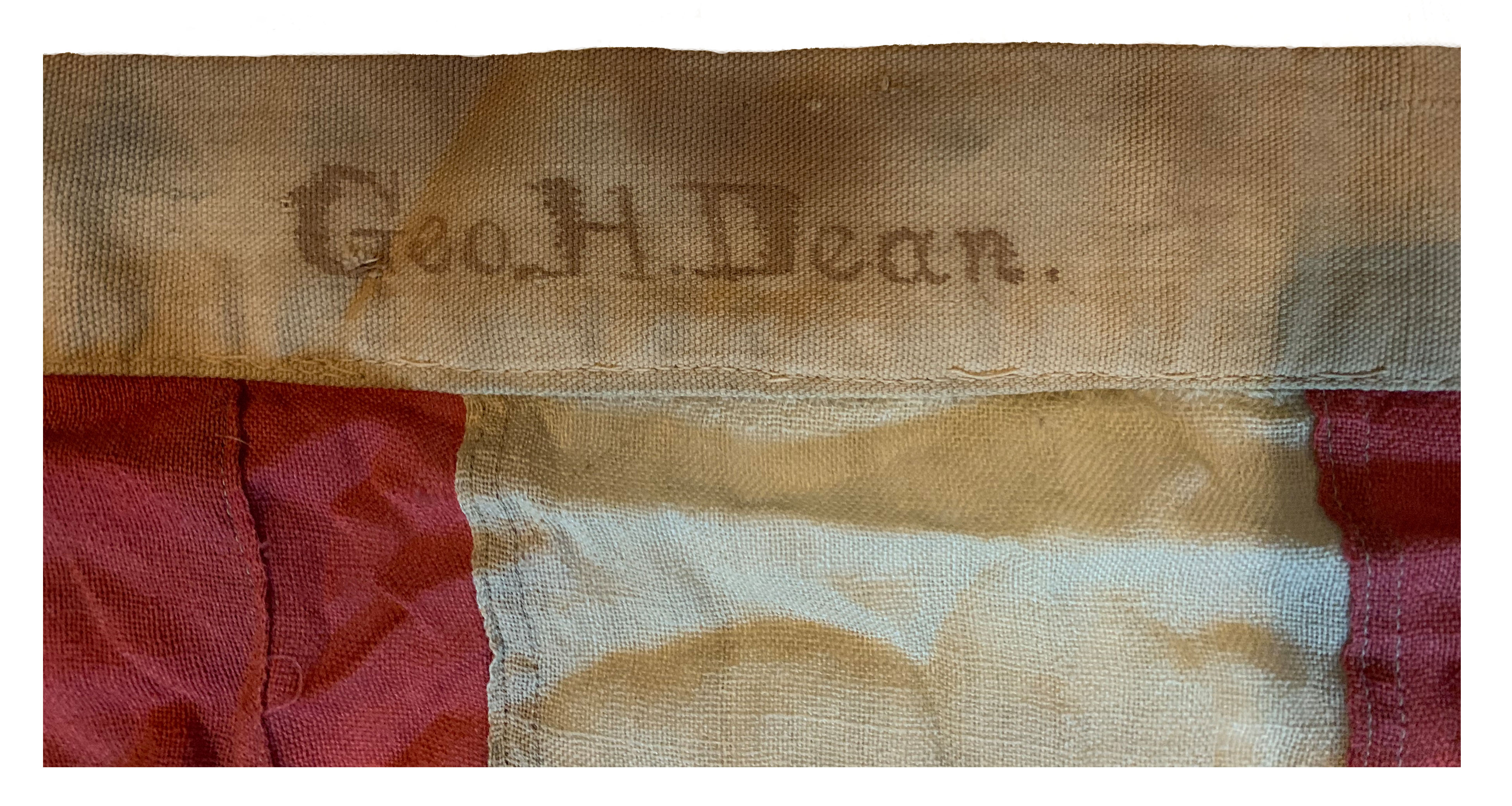
Crisply stenciled in black ink along the canvas hoist is the name "Geo. H. Dean." This marker indicates a classic post-war Grand Army of the Republic (GAR) veteran tribute. Research identifies Captain George H. Dean as a distinguished Union Army officer commissioned out of New York under Major General John E. Wool, whose elite detachment served as the general's personal bodyguard at Fortress Monroe before leading tactical reconnaissance missions deep into enemy territory. Following the war, northern GAR posts frequently stenciled the names of honored commanders onto retired garrison colors to dedicate them as memorial banners.
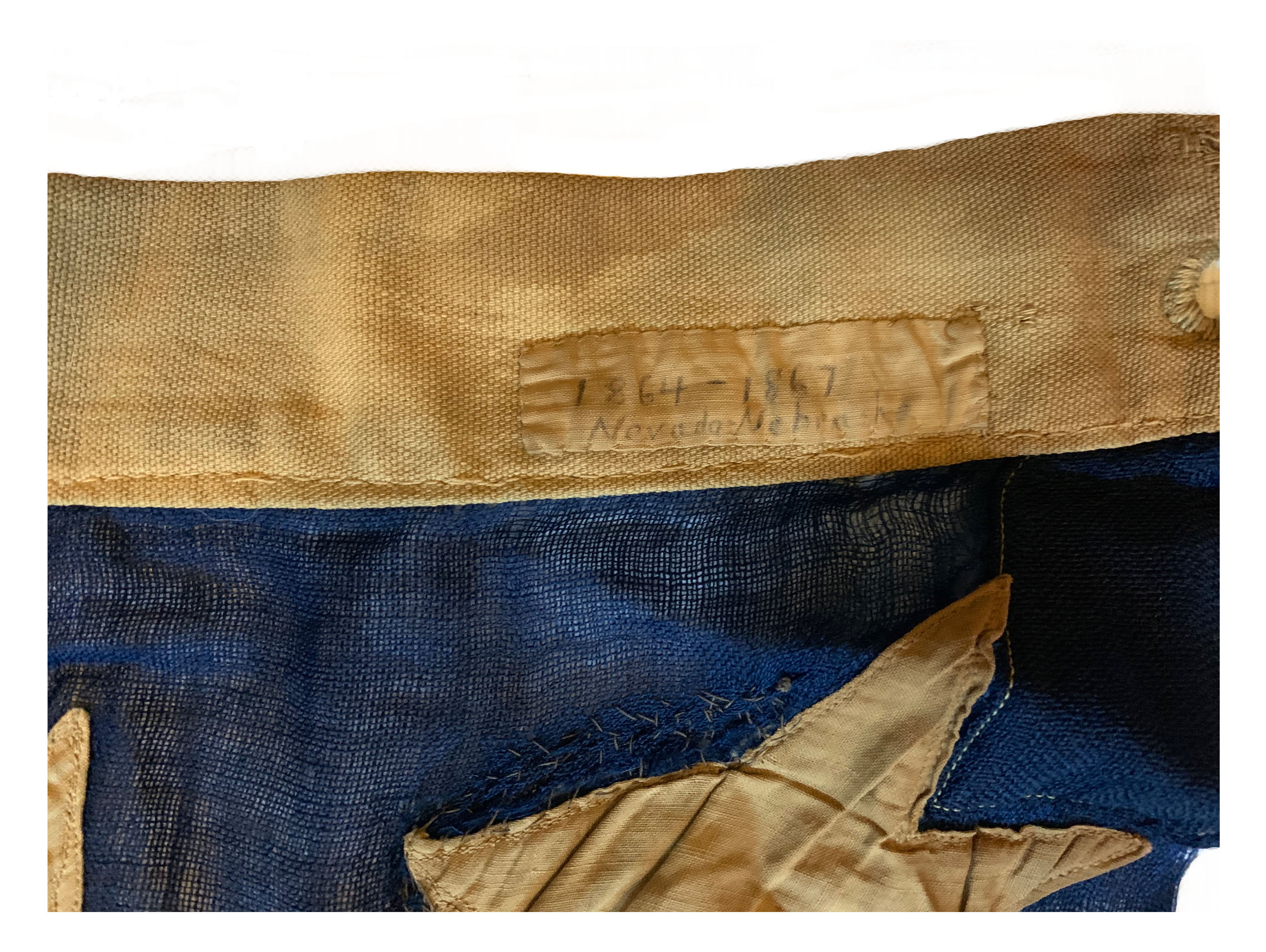
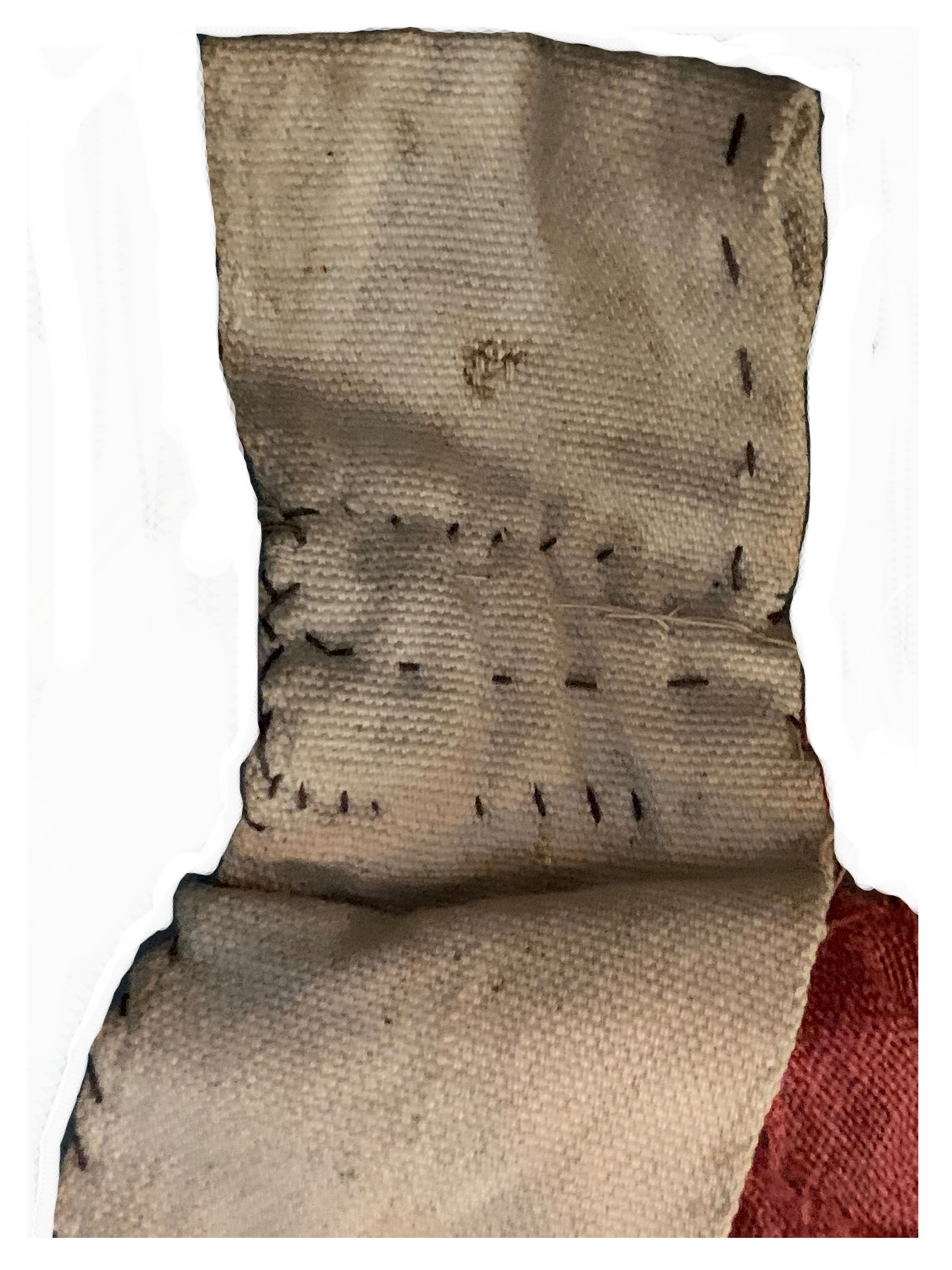
Further cementing its historical window is a rare handwritten ink archival tag hand-stitched onto the hoist reading "1864–1867 / Nevada" with a notation referencing "Nebraska." This tag preserves the rapid expansion of the Gilded Age frontier. Nevada entered the Union on October 31, 1864 (making the 36-star count official on July 4, 1865), while Nebraska closely followed as the 37th state on March 1, 1867. The dual notation indicates that an early collector or quartermaster purposefully documented this banner as having flown precisely during this fleeting transition window.
Description / Condition
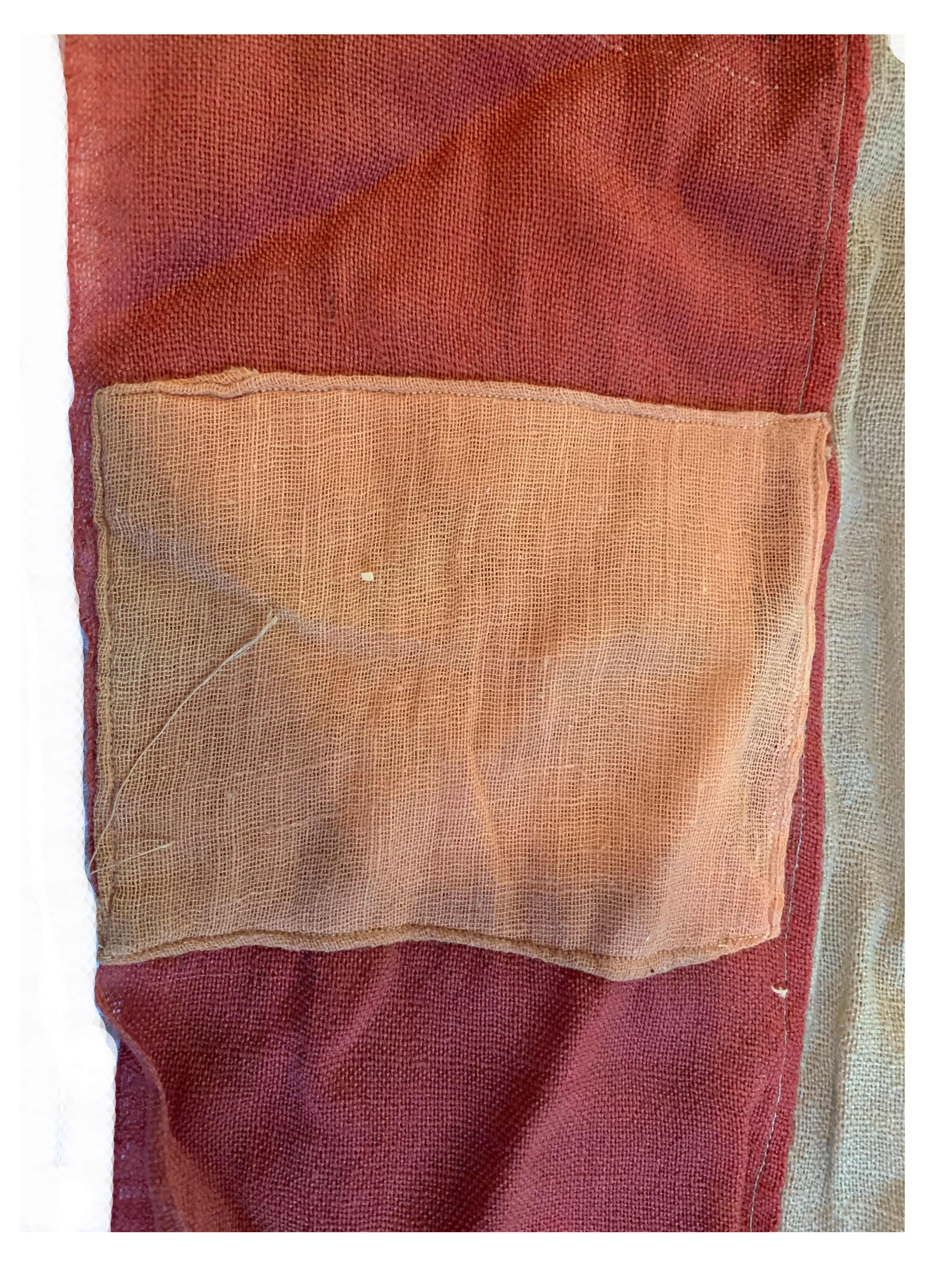
The flag exhibits a magnificent, deep aged patina throughout with natural browning and fiber breakdown consistent with a 140+ year old loomed textile. The fly end shows significant evidence of hard garrison display and heavy wind wear, featuring a large, beautiful rectangular period repair where a block of contrasting orange-toned period fabric was crudely but firmly hand-stitched to the body to stabilize the edge and keep it flying. Minor holes, tattering, and mothing are present across the stripes and canton, adding to its deep historical character.
• Flag size: (Hoist x Fly) 68” x 11’ (5'8" x 11')
• Aspect Ratio: 1:1.94 (conforming to 19th-century U.S. Government military contract specifications)
• Provenance: Captain George H. Dean (Union Army Officer) / Grand Army of the Republic Post Memorial Banner
Email: jtfrancis1775@gmail.com
Item: 36-319-254