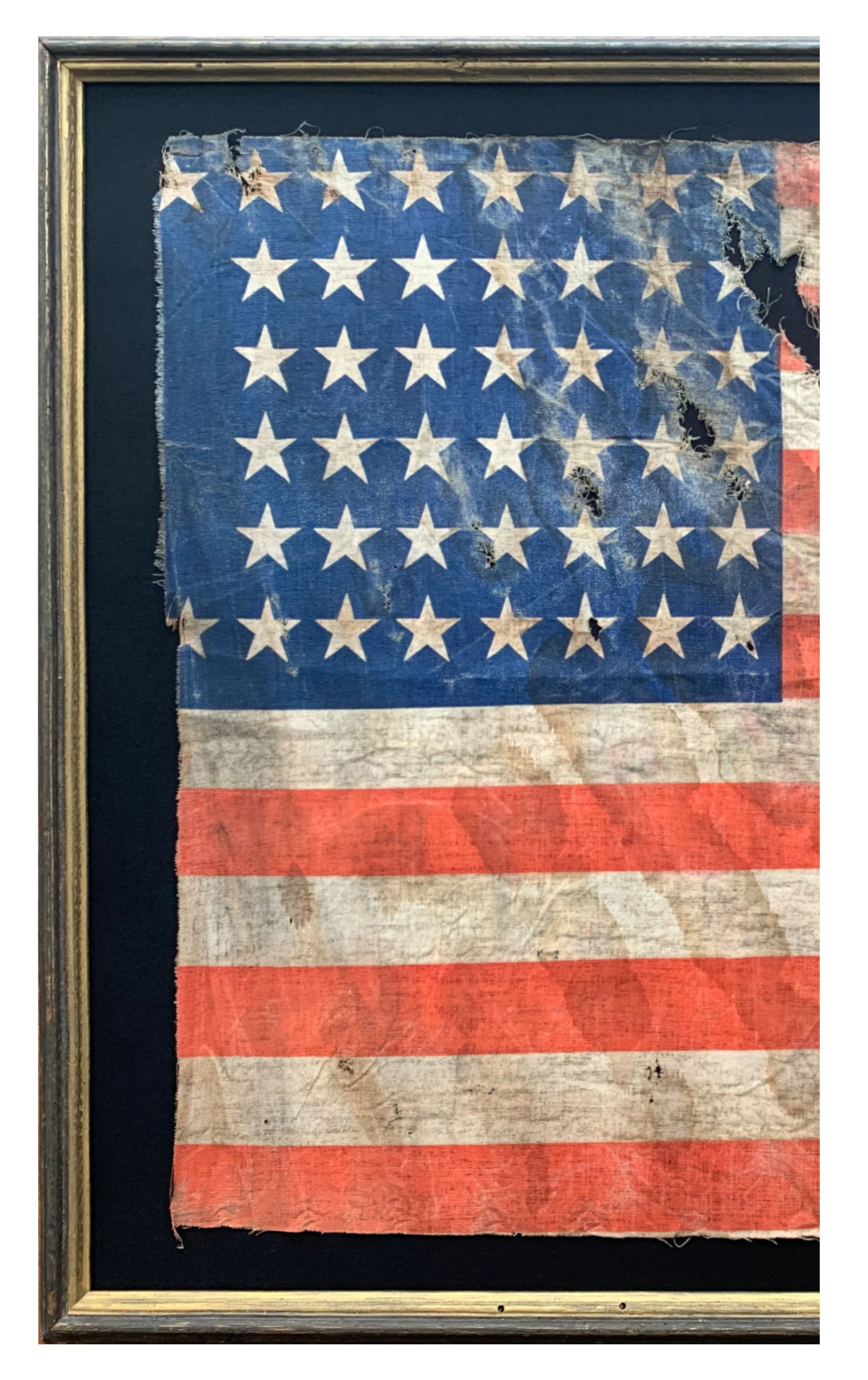
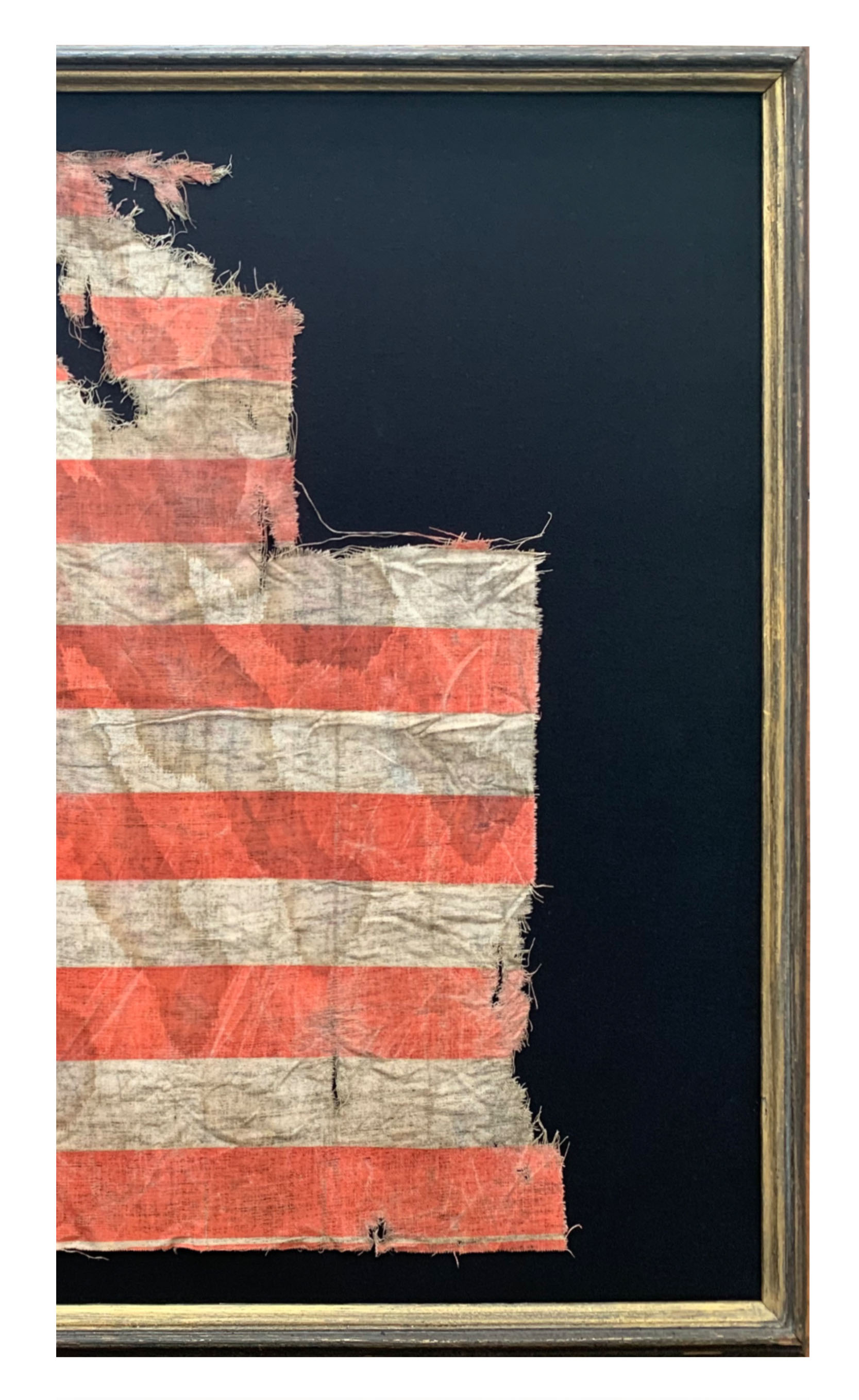
44 Star American Flag - Indian War
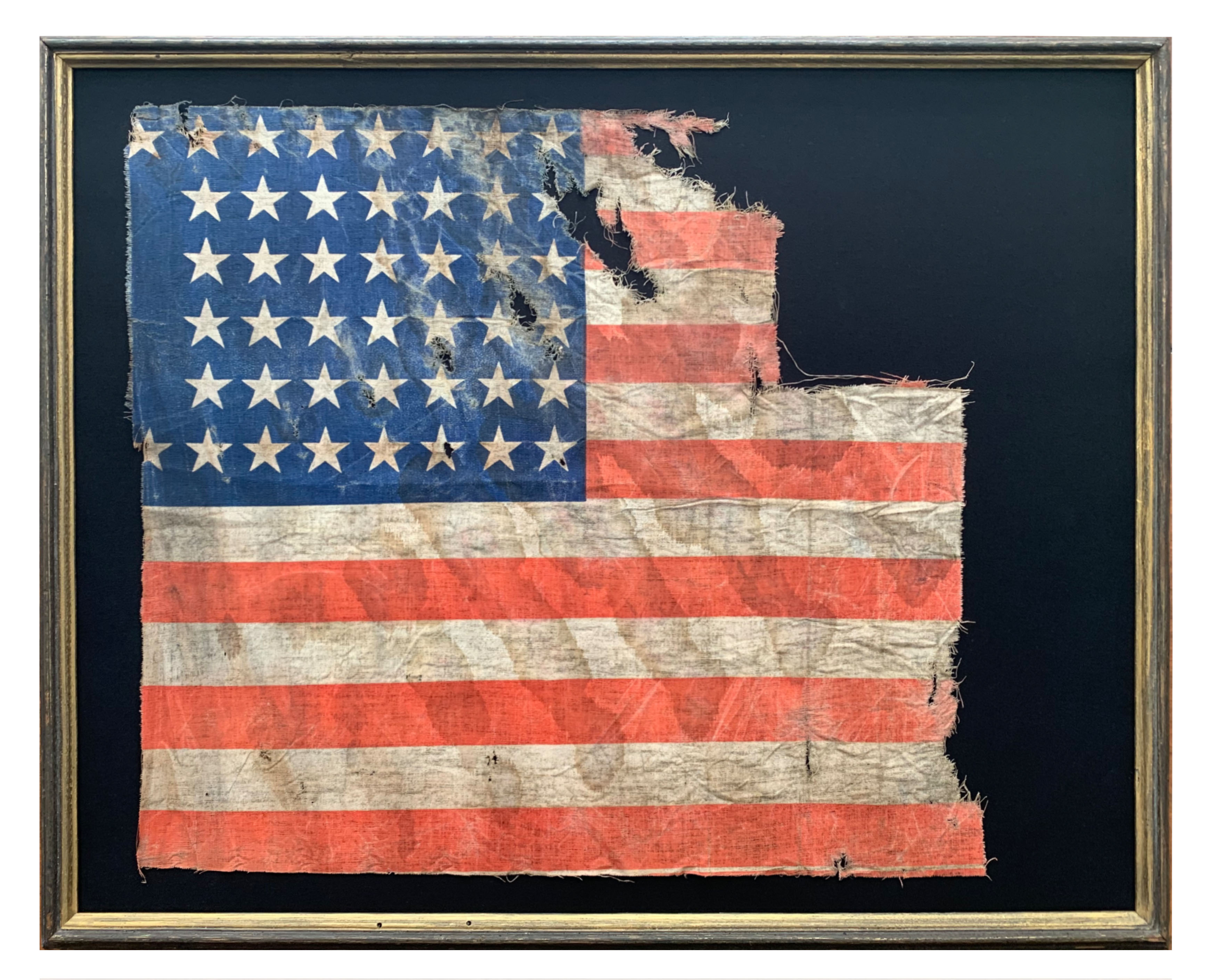
44-STAR AMERICAN PARADE FLAG
Notched star arrangement
Wyoming Statehood | 1890-1896 ca.
Flag size (HxL) 19”x21” (longest lengths)
Frame size (HXL) 23 ½”x28 ½”
Exceptional 44-star American national parade flag, printed on coarse cotton and features a distinctive canton with the 44 stars arranged in rectilinear rows, in a notched configuration. In anticipation of new states being added to the Union, the notched configuration allowed for 4 open spaces along the hoist for the addition of Utah, Oklahoma, New Mexico and Arizona. The flag displays beautifully aged hues, including calypso-red stripes, softly patinated white stars and stripes, and a rich navy-blue canton.
The condition of the flag reflects a journey well lived and the resilience to endure. The combination of its condition, unusual star arrangement, and naturally aged color palette gives the flag a striking historic character.
Wyoming was admitted to the Union as the 44th state on July 10, 1890, and became official on July 4, 1891. It remained the official national flag for approximately five years, used during the administrations of two U.S. presidents: Benjamin Harrison (1889–1893) and Grover Cleveland (1893–1897). The 44-star flag symbolizes a time when the country was expanding westward, while conflicts between the U.S. government, settlers, and Native American tribes were taking place across the American West. The 44-star count was not specific to the Indian Wars; however, it represents the United States during the later period of these conflicts.
Condition Assessment
The flag constructed of coarse plain-weave cotton bunting has structural deterioration mainly concentrated along the fly end. The most significant structural loss is a large, rectangular section of fabric missing in the upper-right quadrant, encompassing much of the top fly-end stripes and fraying on the surviving fly end. Numerous smaller punctures, stress tears, threadbare areas, and localized losses are present throughout the surviving striped field, including along the upper edge of the blue canton. The surviving white stripes have developed a pronounced mottled dark cream-to-tan patina. Extensive staining, dark spotting, and generalized surface soiling consistent with accumulated dirt, soot, and environmental exposure are evident throughout the remaining fabric. There is also minor red dye migration into adjacent white stripes, likely resulting from previous moisture exposure.
Email: jtfrancis1775@gmail.com
Item: 44-495-18