BATTLE OF CHANSELLORSVILLE
Captain Jacob Golladay
Written letter to brother
BATTLE OF CHANSELLORSVILLE
Captain Jacob Golladay
Written letter to brother
Page 1
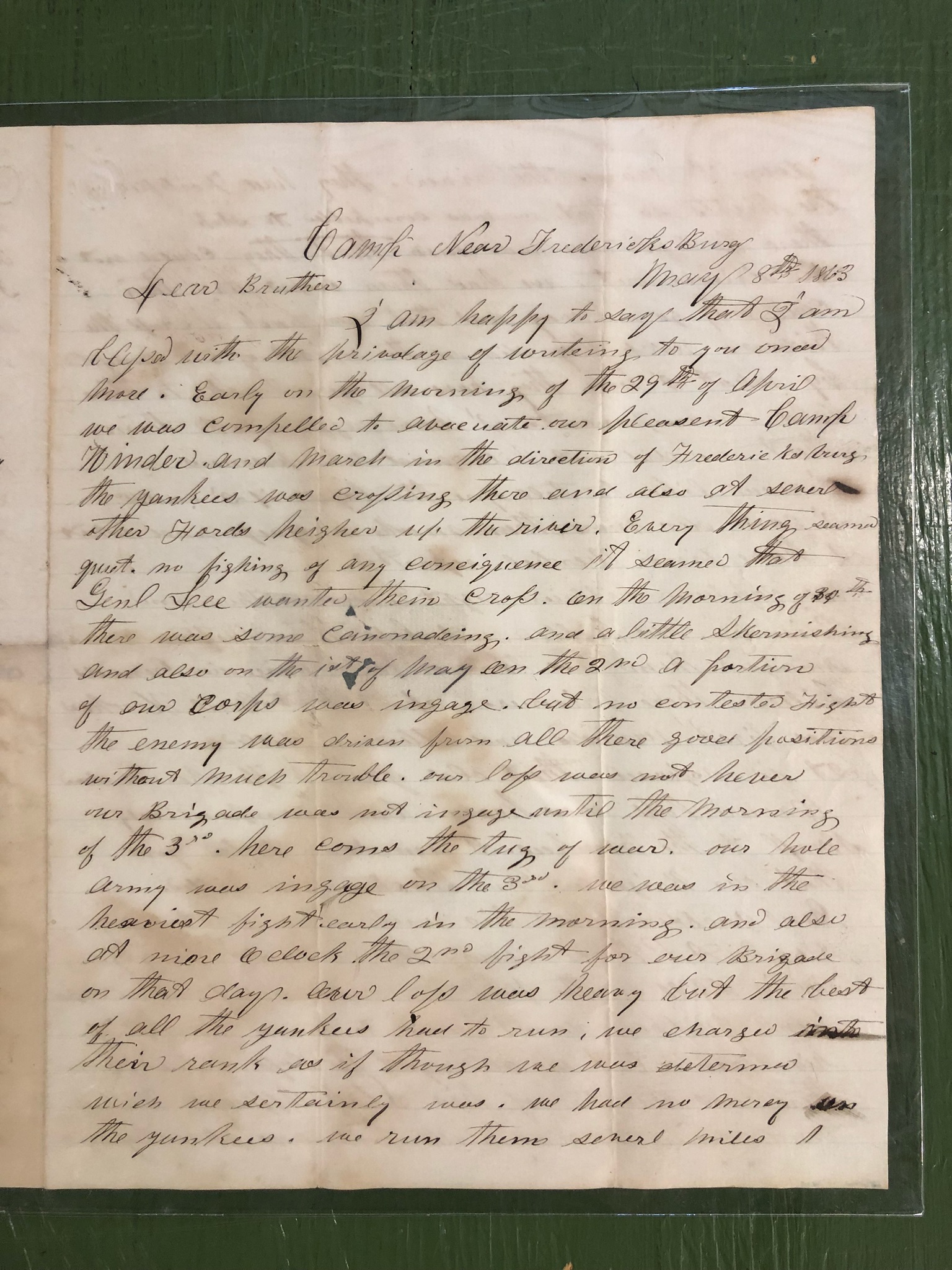
Camp near Fredericksburg
Dear Brother May 8th 1863
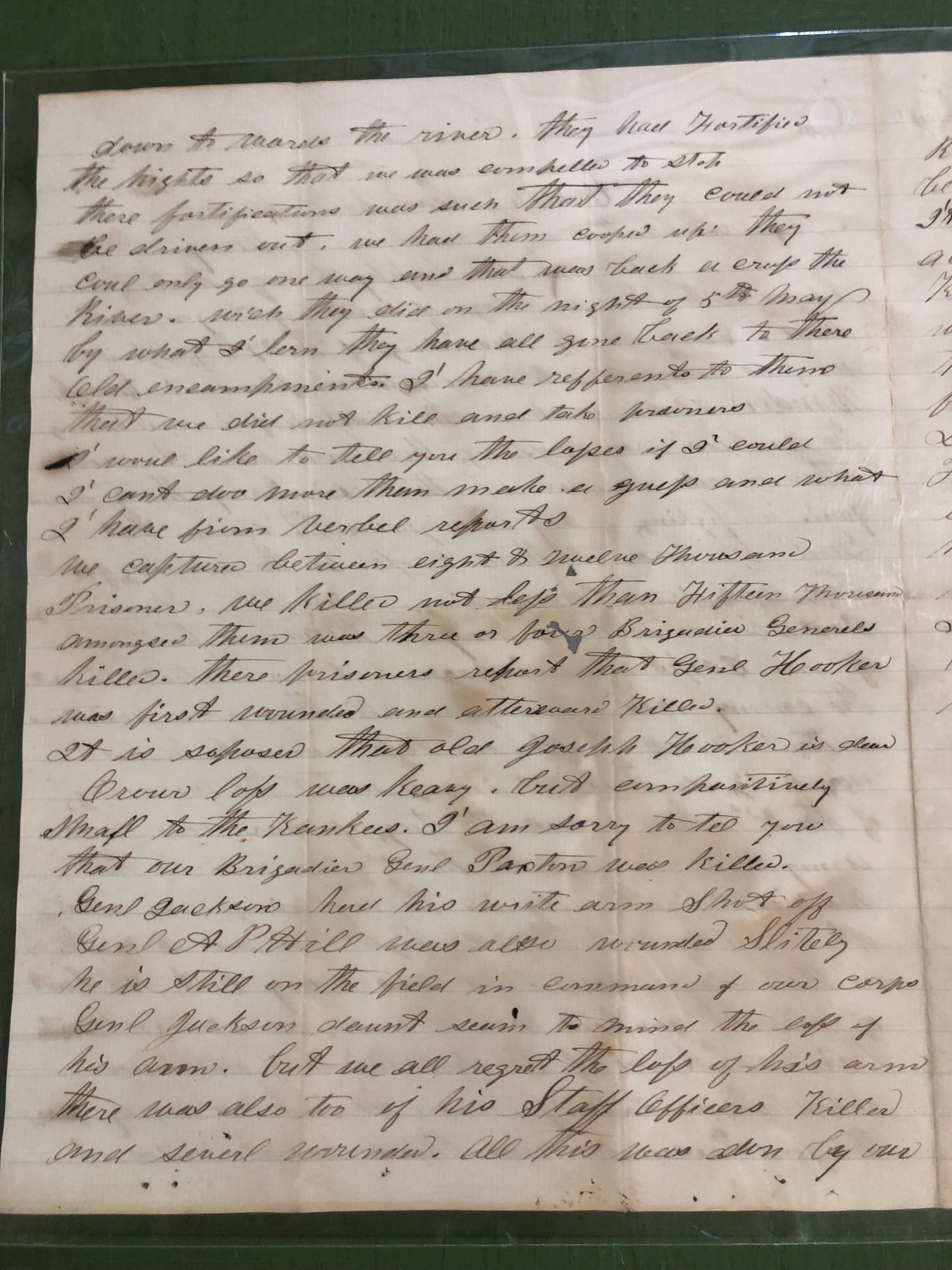
I am happy to say that I am blessed with the privilege of writing to you once more. Early on the morning of the 29th of April, we was compelled to evacuate our present (pleasant) camp Winder and march in the direction of Fredericksburg. The Yankees was crossing there and also at several other Fards (farms?) higher up the river. Everything seems quiet. No fighting of any consequence. It seems that General Lee wanted them to cross. On the morning of 30th there was some cannonading and a little skirmishing and also on the 1st of May. On the 2nd a portion of our corps was engaged but no contested fight. The enemy was driven from all their good positions without much trouble. Our loss was not heavy. Our brigade was not engaged until the morning of the 3rd. Here comes the tug of war. Our whole army was engage on the 3rd. We was in the heaviest fight early in the morning and also at nine o’clock. The second fight for our brigade on the day. Our loss was heavy but the best of all the Yankees had to run. We charged into their ranks as if though we was determined which we certainly was. We had no mercy on the Yankees. We run them several miles
End of first page of letter
Notes:
The fiercest fighting of the battle—and the second bloodiest day of the Civil War—occurred on May 3 as Lee launched multiple attacks against the Union position at Chancellorsville, resulting in heavy losses on both sides and the pulling back of Hooker's main army. That same day, Sedgwick advanced across the Rappahannock River, defeated the small Confederate force at Marye's Heights in the Second Battle of Fredericksburg, and then moved to the west. The Confederates fought a successful delaying action at the Battle of Salem Church. On the 4th Lee turned his back on Hooker and attacked Sedgwick, and drove him back to Banks' Ford, surrounding them on three sides. Sedgwick withdrew across the ford early on May 5. Lee turned back to confront Hooker who withdrew the remainder of his army across U.S. Ford the night of May 5–6.
From Wikipedi
Captain Jacob Golladay
Written letter to brother
Page 2
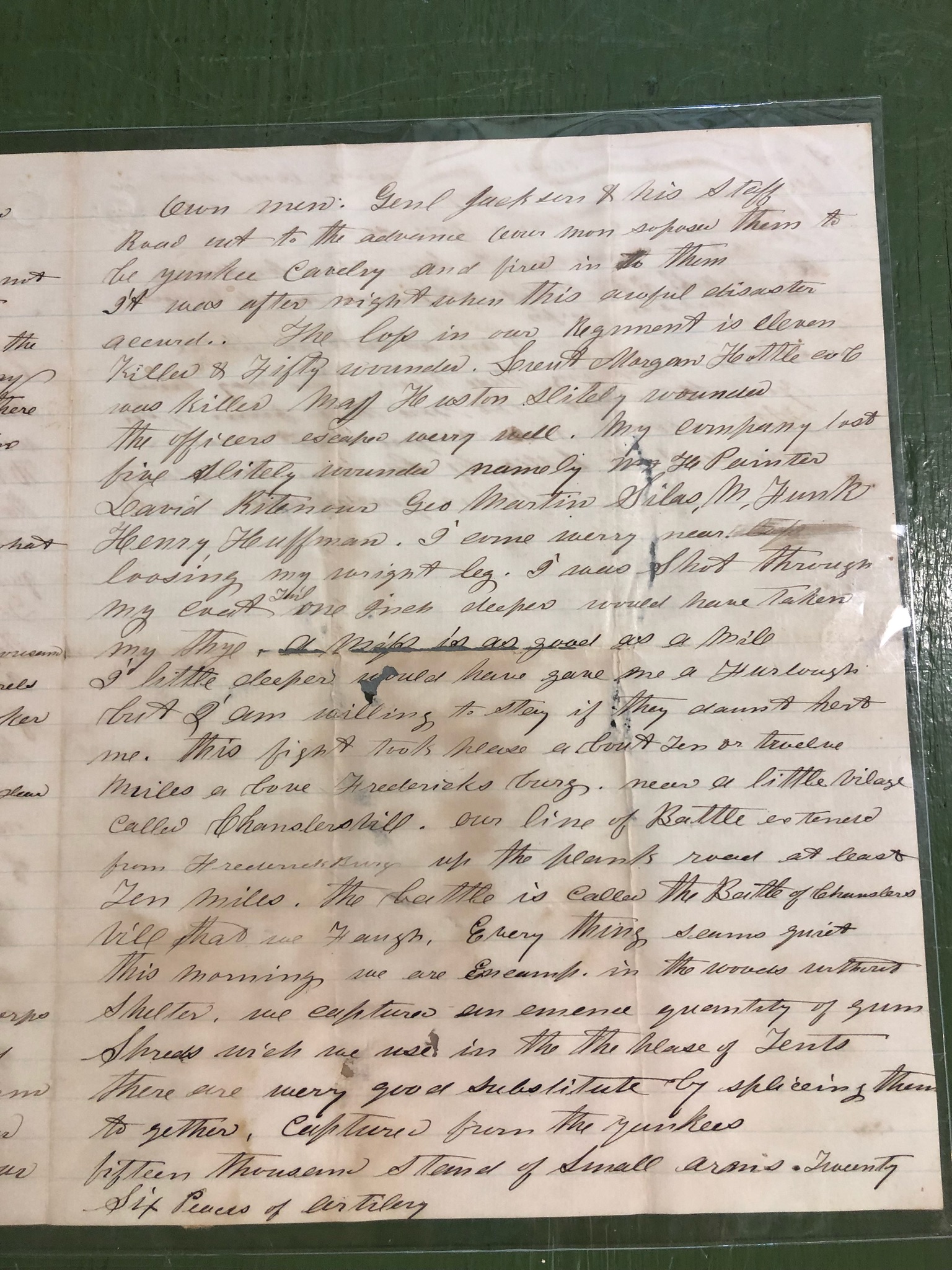
down toward the river. They had fortified the heights so that we was compelled to stop. Their fortification was such that they could not be driven out. We had them cooped up. They could only go one way and that was back across the river which they did on the night 5th of May. By what I learned they have all gone back to their old encampment. I have reference to them that we did not kill and take prisoners. I would like to tell you the losses if I could. I can’t do more than made a guess and what I have from verbal reports. We captured between eight & twelve thousand prisoners. We killed not less than fifteen thousand. Amongst them was three or four Brigadier Generals killed. There prisoners report that General Hooker was first wounded and a thousand killed. It is supposed that old Joseph Hooker is dead. Our loss was heavy but comparatively small to the Yankees. I am sorry to tell you that our Brigadier General Paxton was killed. General Jackson had his right arm shot off. General A. P. Hill was also wounded slightly. He is still on the field in command of our corps. General Jackson don’t seem to mind the loss of his arm but we all regret the loss of his arm. There was also two of his Staff Officers killed and several wounded. All this was done by
Captain Jacob Golladay
Written letter to brother
Page 3
our men. General Jackson and his staff rode out to the advance. Our men suppose them to Yankee Calvary and fire into them. It was after night that his awful disaster occurred. The loss in our regiment 11 killed and 50 wounded. Sergeant Morgan Hottle was killed. Major Huston was slightly wounded. The officers escaped very well. My Company loss five slightly wounded namely Major (first name unclear) Painter, David Rittenour, George Martin, Siles Funk and Henry Huffman. I come nearly loosing my wright leg. I was shot through my coattail. One inch deeper would have taken my thye. A miss is as good as a mile. A little deeper would have given me a furlough but I am willing to stay if they don’t hurt me. This fight took place 10 or 12 miles above Fredericksburg near a little village called Chancellorsville. Our line of battle extended from Fredericksburg up to plank road at least 10 miles. The battle is called the battle of Chancellorsville that we fought. Everything seems quiet this morning. We are encamped in the woods without shelter. We captured an immense quantity of gun shreds which we use in the place of tents. They are very good substitute by splicing them together. Captured from the Yankees fifteen thousand stands of small arms, twenty six pieces of artillery.
Captain Jacob Golladay
Written letter to brother
Page 4
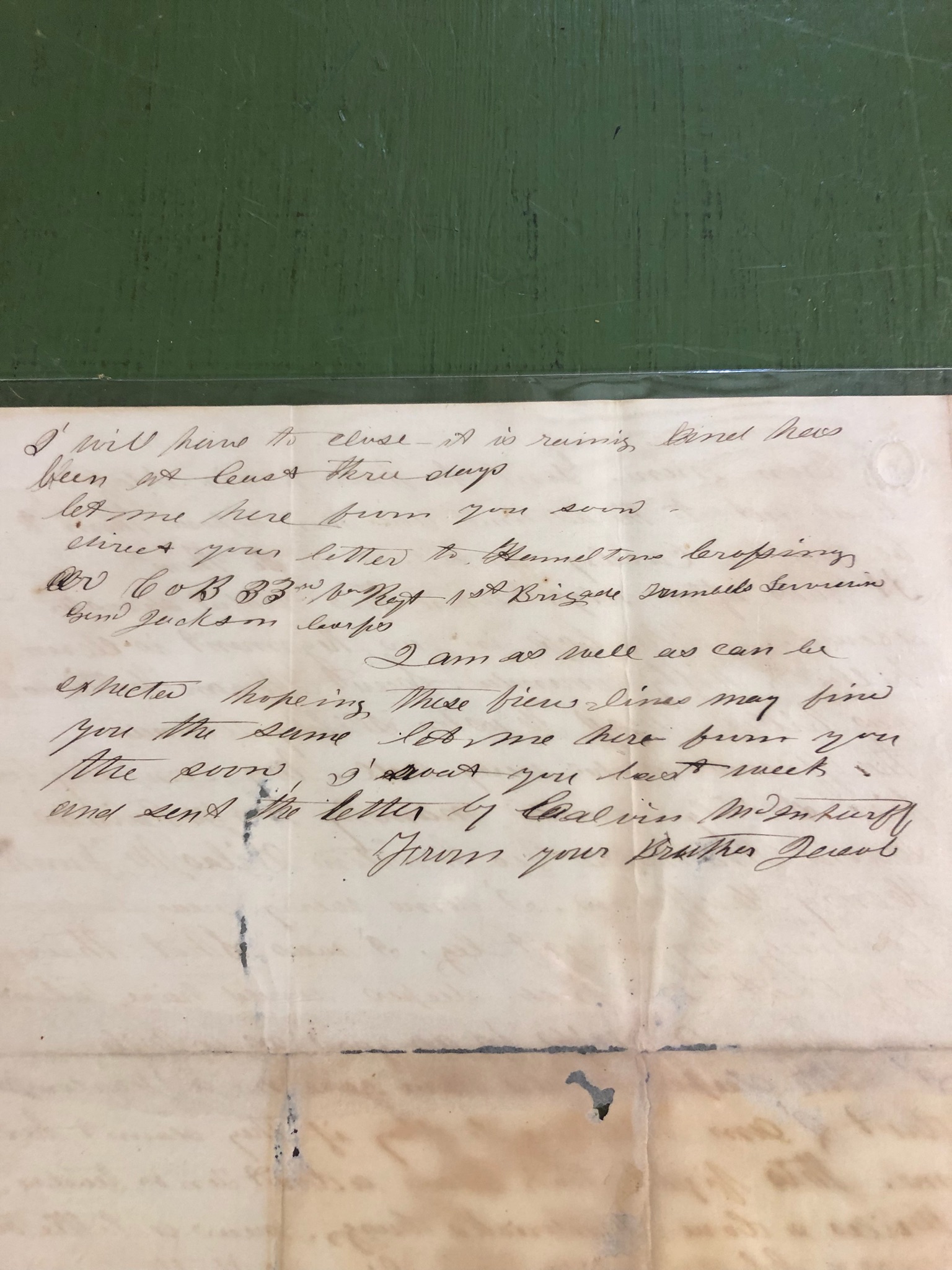
I will have to close as it is raining and has been for at least three days. Let me hear from you soon. Direct your letter to Hamilton’s Crossings Co. B, 33 Regiment, 1st Brigade, Trumbles Division, General Jackson’s Corps. I am as well as can be expected. Hope these few lines may find you the same. Let me hear from you soon. I wrote you last week and sent the letter by Calvin McInturff.
Your brother Jacob.
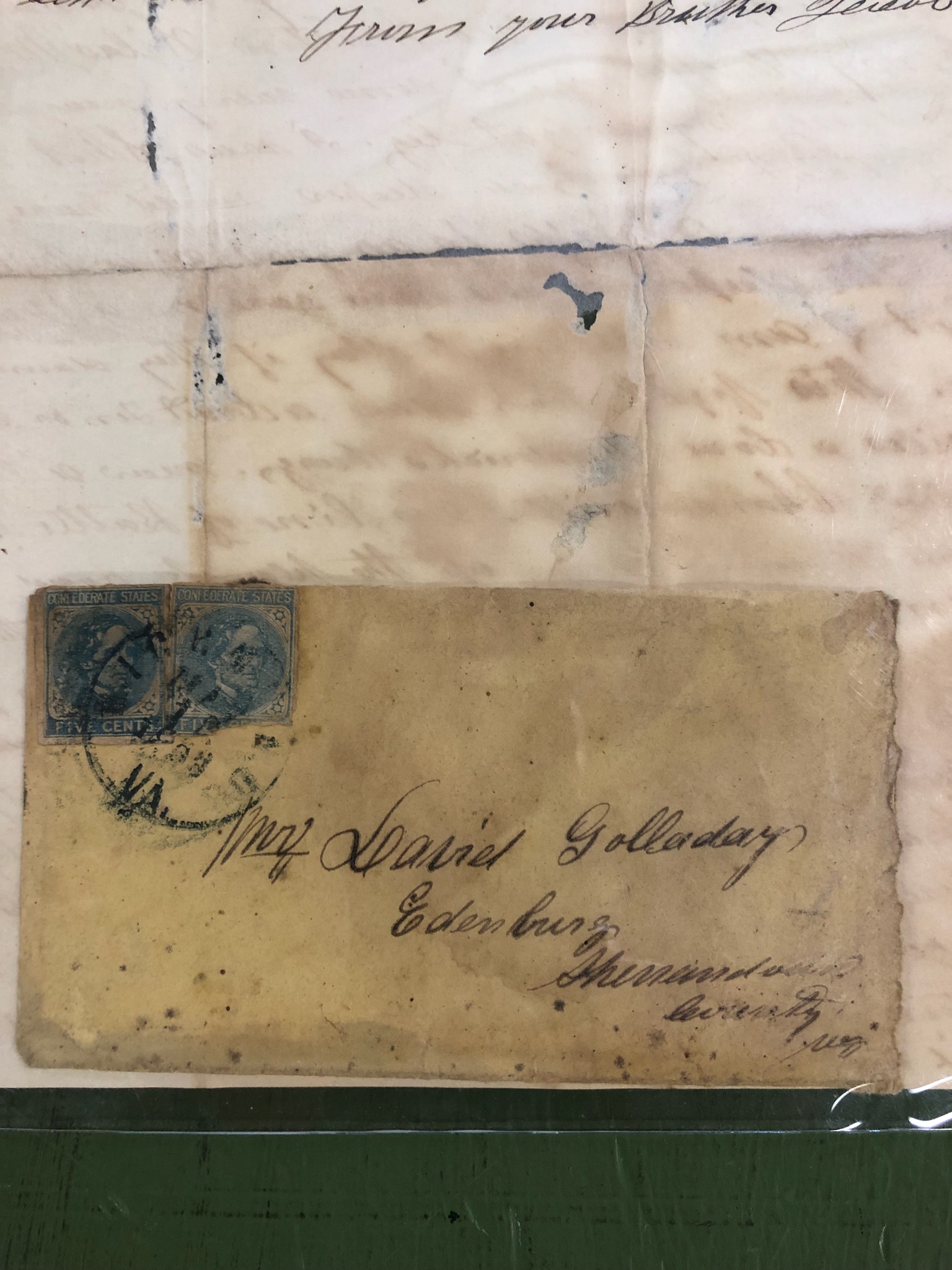
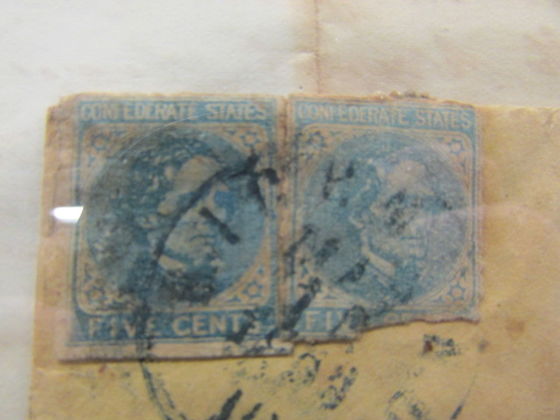
IMPORTANT SHENANDOAH COUNTY, VA, CIVIL WAR LETTER:
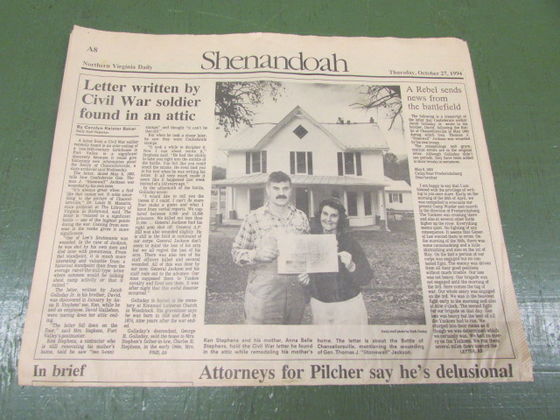
A letter dated May 8, 1863, from a camp near Fredricksburg, VA, from Confederate soldier Jacob Golladay, Jr., to his brother David after the Battle of Chancellorsville. The letter was found during restoration of a home owned by Anna B. Stephens in Fort Valley, VA. The home had been previously owned by George R. Golladay, a decendant of Jacob Golladay.
The letter tells how Confederate Gen. Thomas J. “Stonewall” Jackson was wounded by his own men. Golladay also writes that Gen. A. P. Hill was slightly wounded. Other names listed in the letter are Morgan Hottle KIA and buried near Pughs Run, Silas M. Funk, Henry Huffman, George Martin, David Rittenour.
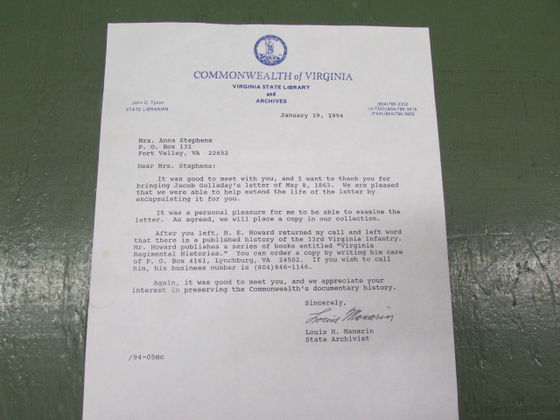
Dr. Louis H. Manarin, State Archivist at the Library of Virginia in Richmond, stated that the letter is related to a significant battle, one of the highest points of the Civil War. Coming from someone in the ranks gives it more significance. Jacob Golladay served with Co. B 33rd Va. Regt. 1st Brigade and is buried in the cemetery at Emanuel Lutheran Church, Woodstock, VA.
Item: m-1863-024